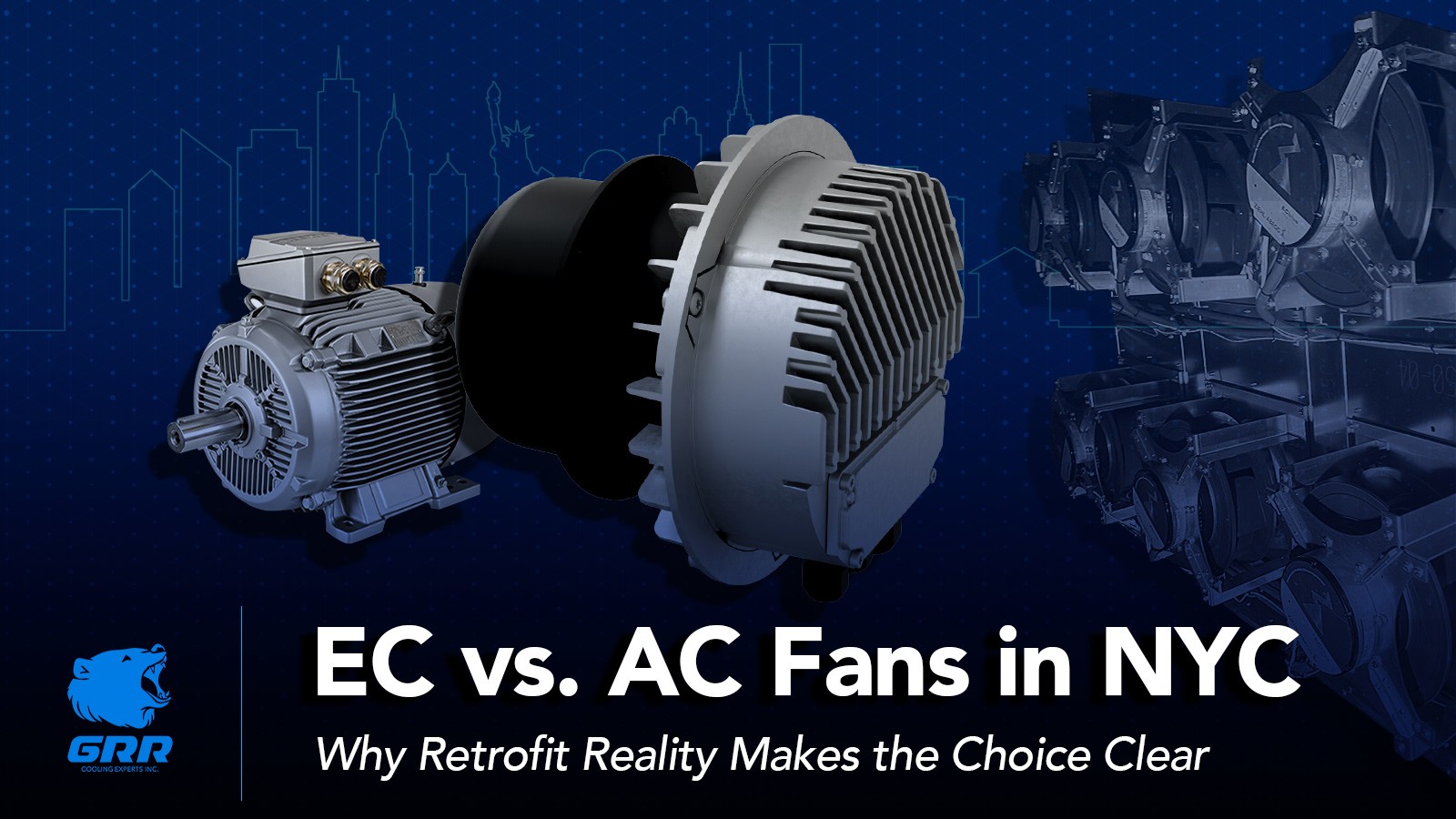
EC vs AC Fans in NYC: Why Retrofit Reality Makes the Choice Clear
Nov 5, 2025
Why EC fan arrays solve the hardest HVAC retrofit problems in NYC buildings
When a 40-year-old belt-driven fan failed in a Manhattan hospital mechanical room, replacing it wasn’t just a maintenance call — it was a logistical nightmare. The space was too tight for rigging, the freight elevator had a 200 lb limit, and a crane would’ve required $20K in permits. This isn’t rare. It’s NYC retrofit reality.
GRR Cooling Experts engineers fan retrofits for NYC hospitals, labs, and schools -with 400+ legacy replacements completed in landlocked mechanical rooms.
Problem #1: NYC Spaces Aren’t Built for Fan Replacements
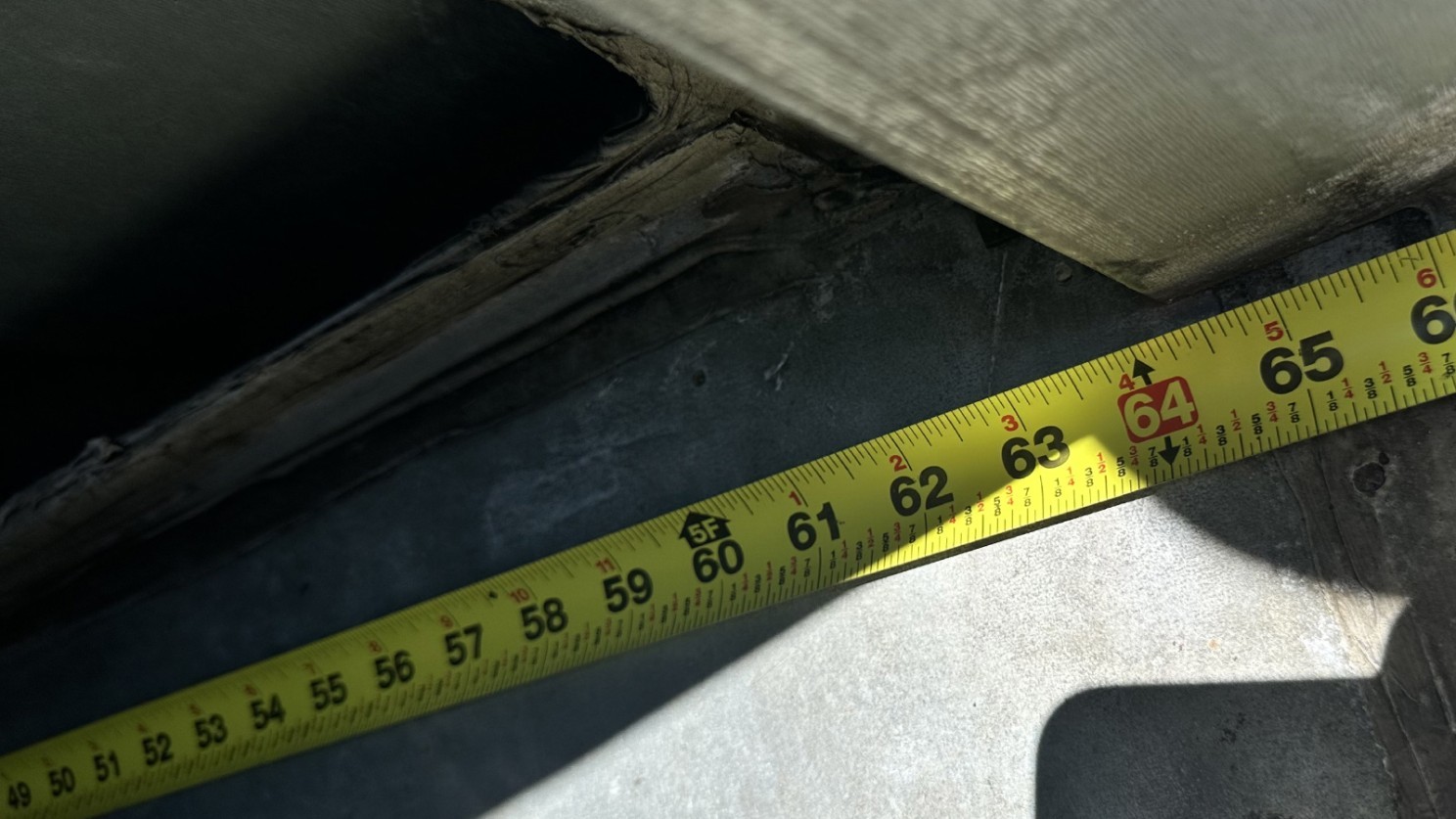
Most legacy fans in New York buildings were installed before modern codes -often dropped in through open roofs during original construction. Now those same fan rooms are landlocked behind stairwells, fire-rated corridors, and 30" doorways.
EC fan arrays solve this:
Modules fit through standard doors (often 30" clear)
No cranes, no structural demo
< 100 lbs per unit
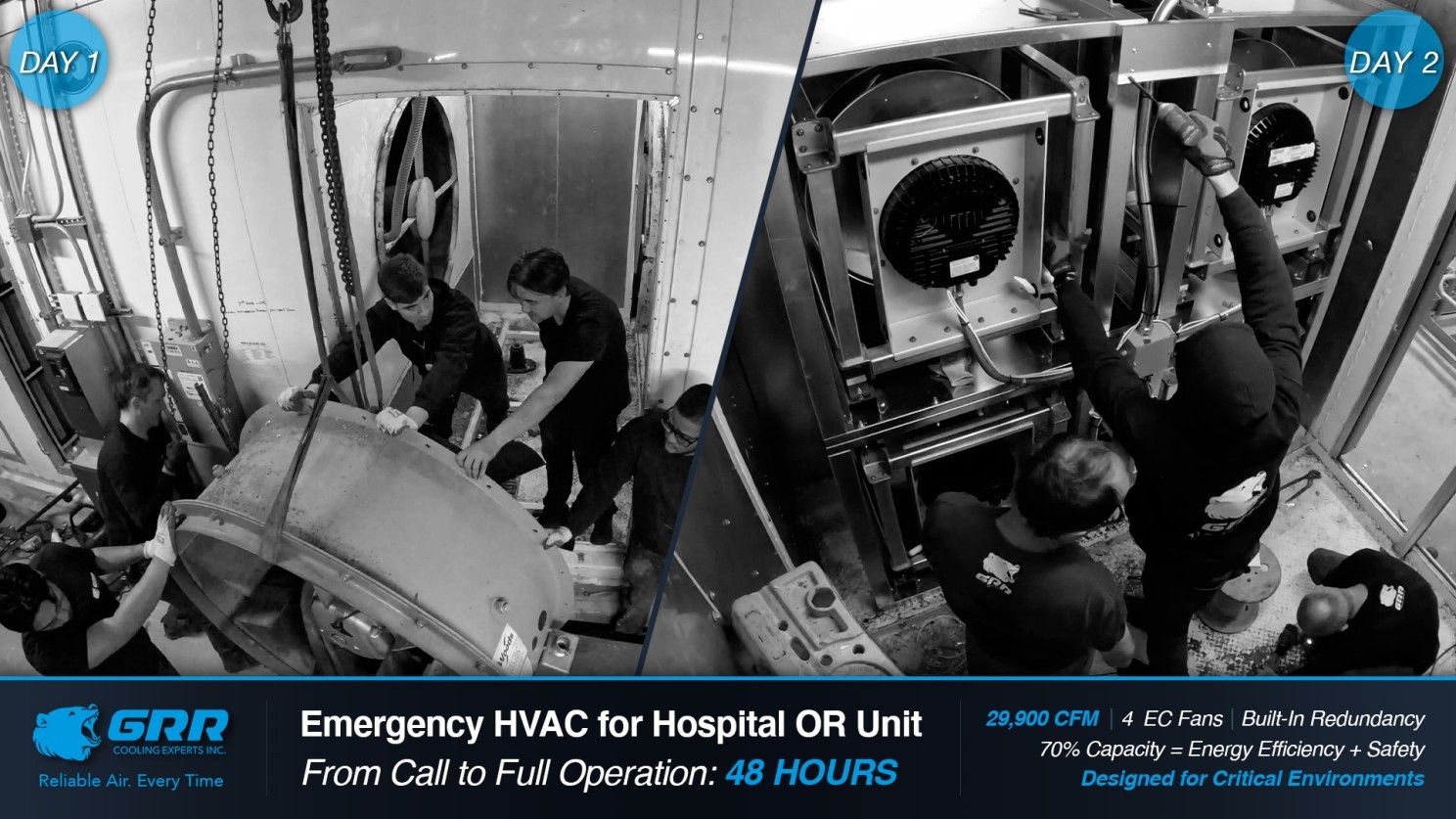
Commissioned in place — often within 48 hours
Noise drops 2–5 dB vs belt drives in the same duty
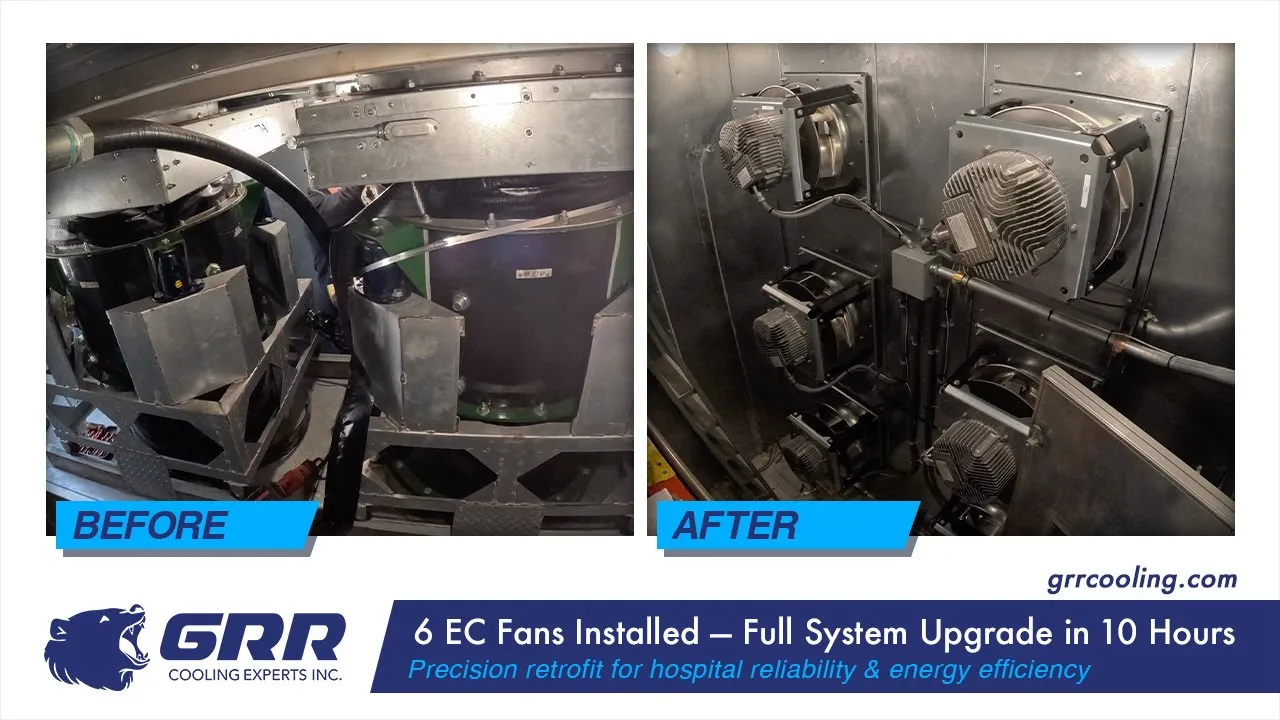
Field note: During a critical hospital retrofit at MSK Cancer Center, a six-fan EC array replaced the aging supply fan within 10 hours. The system now runs at 60 % load, maintaining high static pressure and full airflow continuity—no crane, no shutdown.
Many of the EC fan array modules used in these retrofits are engineered and manufactured by our partner BAIKAL MECHANICAL , whose precision fabrication and shared focus on retrofit efficiency make fast, no-shutdown installations possible.
See the full retrofit in action — a 1-minute before-and-after installation case.
Watch more GRR's real-life installation cases on our YouTube channel>
Problem #2: Local Law 97 Is Closing In
Old AC motors are energy heavy — and the city is watching. Local Law 97 penalizes buildings that exceed emissions caps; 24/7 fans are frequent offenders and fines escalate over time.
EC fans cut energy use by 30–70%:
Integrated controls enable true variable speed
No belts = no belt losses or re-tensioning
Real-time monitoring for load-following
Payback signal: On 24/7 supply fans, EC retrofits commonly deliver simple payback in 2–4 years when utility incentives apply. For LL97-exposed buildings, avoided fines can shorten that curve.
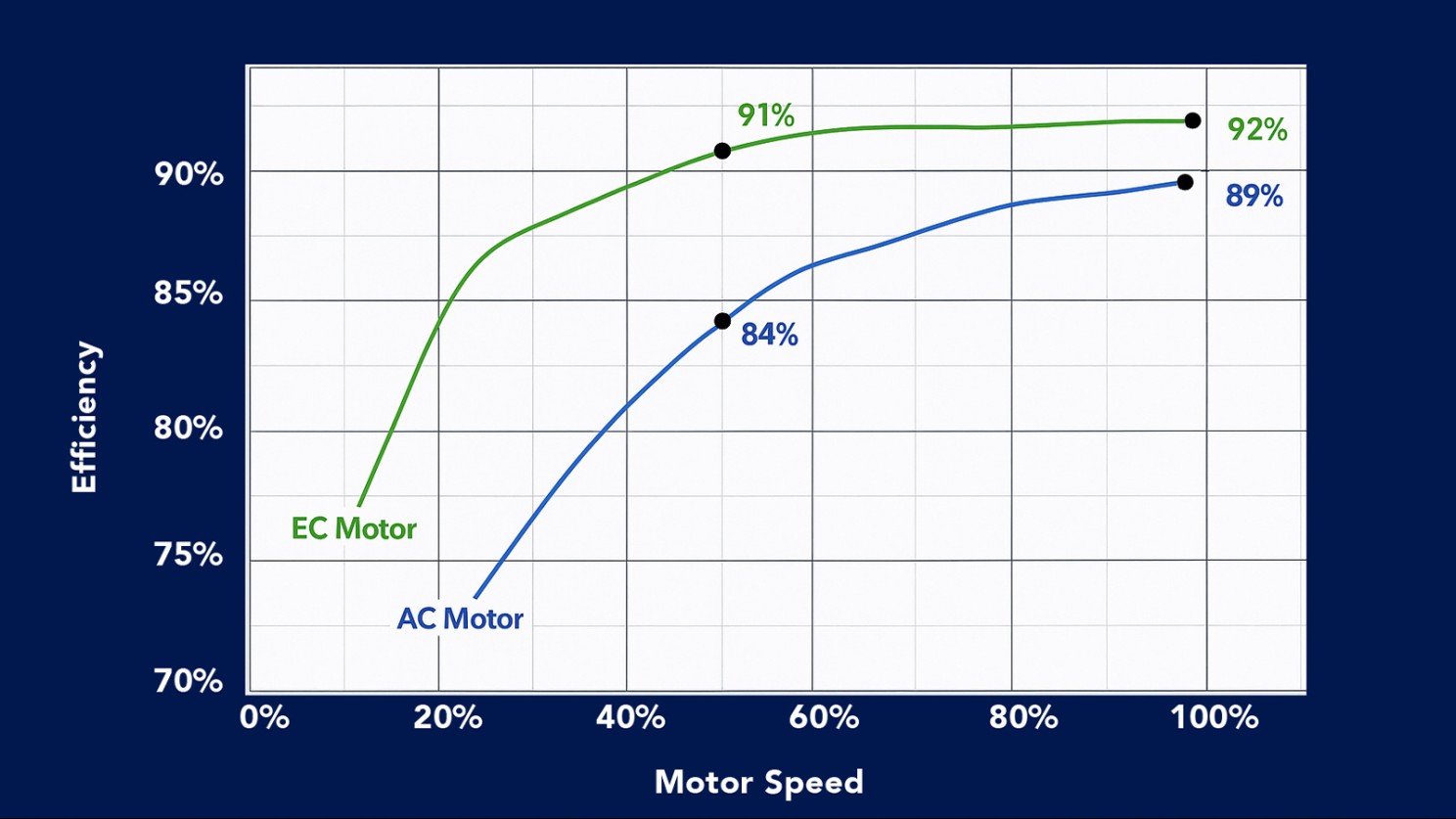
Biggest Win on Variable Demand
Field note: In a Midtown school, an EC retrofit shaved 12,000 kWh annually — helping bump their Energy Grade from C to B.
Problem #3: Downtime = Unacceptable
A single AC fan fails? Airflow stops. In clinical spaces, stop isn’t an option.
EC fan arrays (walls) built in redundancy:
Multiple smaller fans = N+1 backup
If one fails, the rest keep running
Swappable without shutdown
BMS alarms on module fault — staff schedule swap, no emergency call-out
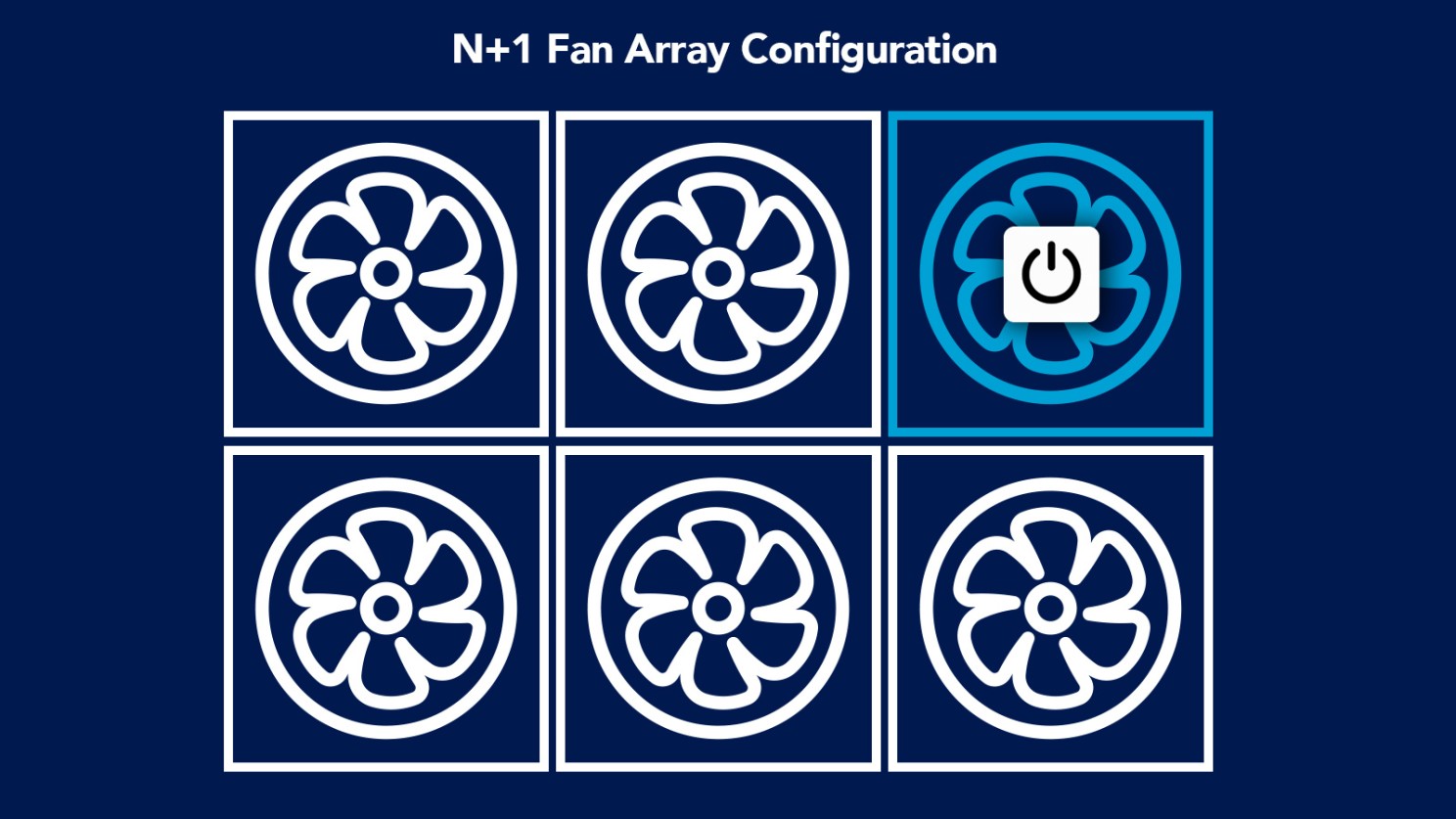
N+1 Fan Redundancy
Field note: For a Queens lab, we installed a 9-fan array with N+2 redundancy. When a module failed, the BMS issued a notice — no airflow loss, no site visit needed.
Bonus: Smart Integration Built-In
BACnet/Modbus ready
Pairs with existing BMS
Remote diagnostics
EC fans aren’t just efficient — they’re addressable. Compared to retrofitting VFDs onto old AC motors, EC removes belt losses, reduces harmonics risk, and simplifies commissioning.
Where EC May Not Be Ideal
Ultra-large single-fan duties with atypical pressure envelopes, strict procurement lock-ins, or edge cases with limited incentives. In those cases, we still evaluate AC + VFD with upgraded controls if it pencils better.
GRR in NYC Critical Spaces
400+ legacy fan replacements completed
ORs, isolation rooms, labs, and schools and universities
48-hour down-to-up retrofits delivered when the stakes are high
Need to Replace an Old Fan?
Request a free EC vs AC assessment (NYC, 20-minute engineer call) admin@grrcooling.com Or ask for the EC Retrofit Planning Guide — covering doorway access, rigging, power, and BMS integration.
About GRR Cooling Experts
GRR Cooling Experts Inc. is a New York–based HVAC retrofit engineering company specializing in ventilation upgrades for hospitals, laboratories, schools, and commercial buildings. Since 2007, GRR has helped organizations across the NYC metro area improve air reliability, energy efficiency, and compliance with Local Law 97 through precision EC fan array retrofits and critical environment ventilation solutions. Our team designs, installs, and commissions custom fan walls and EC-motor systems that reduce downtime, energy use, and maintenance costs — ensuring safe, continuous airflow where performance matters most.

Frequently Asked Questions (FAQ)
Why are fan replacements so difficult in older NYC buildings?
Many legacy fans were installed during original construction when roofs were open and access was unrestricted. Today, those mechanical rooms are often landlocked behind stairwells, fire-rated corridors, and narrow doorways, making traditional fan replacement difficult without cranes or structural work.
How do EC fan arrays fit where traditional fans cannot?
EC fan arrays are built from multiple compact modules, often weighing under 100 pounds each. These modules can pass through standard doors and be assembled inside the air handler, eliminating the need for cranes, roof openings, or major demolition.
Can EC fan arrays be installed without shutting down critical spaces?
In many cases, yes. EC fan arrays are commonly installed during short planned shutdowns or weekend windows. Because the system is assembled and commissioned in place, airflow can often be restored within 24 to 48 hours, even in hospitals and laboratories.
How much energy can EC fan arrays save compared to legacy AC fans?
Energy savings typically range from 30 to 70 percent, depending on duty cycle, operating hours, and control strategy. Fans that operate 24/7 with variable demand usually achieve the highest savings.
Do EC fan arrays help buildings meet Local Law 97 requirements?
Yes. Continuous HVAC fans are a frequent source of excess electrical load and carbon emissions. Replacing legacy AC fans with EC fan arrays can significantly reduce energy use and associated emissions, helping buildings move toward Local Law 97 compliance.
What happens if one fan in an EC fan array fails?
EC fan arrays are designed with built-in redundancy. If one fan fails, the remaining fans automatically compensate to maintain airflow. Many systems are designed with N+1 or N+2 redundancy, allowing continued operation without emergency shutdowns.