EC Fan Array Retrofits in NYC Hospitals and Commercial Buildings
Nov 21, 2025
What Facility Managers and Building Owners should know before upgrading to EC fan arrays
New York City’s hospitals, labs and commercial buildings face strict energy and emissions rules under Local Law 97. Why NYC buildings are switching to EC fan arrays> Many large buildings must cut carbon output significantly over the next decade, which makes HVAC upgrades a priority. One of the most effective retrofit strategies today is replacing old AC supply fans inside air handling units with EC fan arrays. EC fans use permanent magnet motors and integrated electronics, which eliminates belts, brushes and external drives. They offer high efficiency, precise speed control and much lower heat loss.
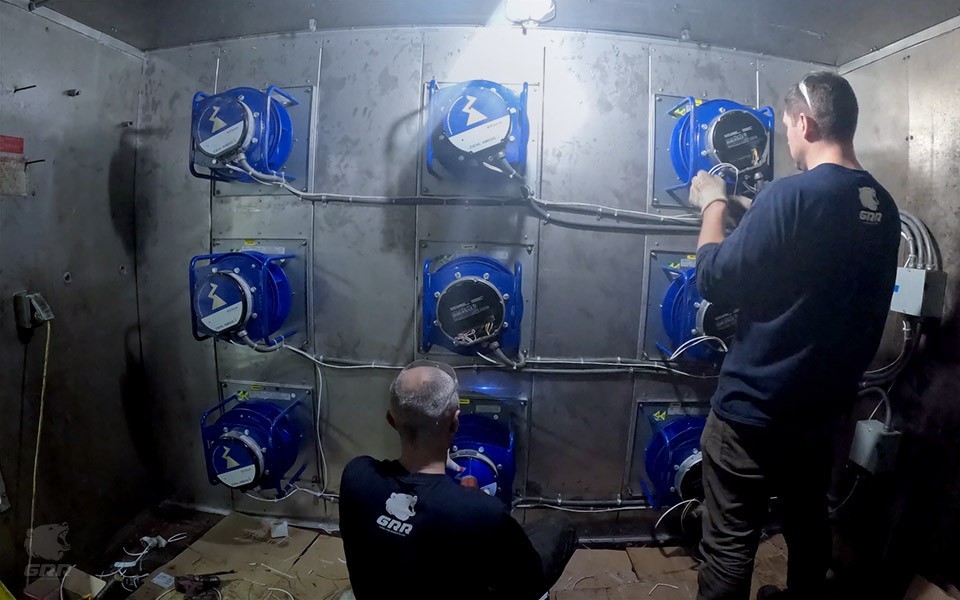
GRR's technicians installing EC fan wall during a NYC HVAC retrofit (Image by GRR Cooling Experts)
EC fan walls replace one large fan with several smaller ones working in parallel. Each module is compact and direct-drive, with variable speed capability built into the motor. This design allows the entire array to match airflow demand without wasting energy. In many applications, EC fans run 40 to 60 percent more efficiently than old AC fans. Because fan systems can account for a large portion of a building’s HVAC energy use, switching to EC arrays delivers immediate and measurable reductions in energy use and carbon output. For New York buildings working toward Local Law 97 targets, this is a strong advantage.
Reliability and Redundancy:
EC fan arrays improve system uptime. If one fan in the array stops, the remaining fans automatically compensate to maintain airflow. A well-designed array can operate in N plus 1 or N plus 2 configurations so that no air handler needs to be taken offline for a single fan fault. Maintenance needs are low because there are no belts or brushes to replace. The sealed, brushless design also reduces noise and vibration. For facilities that run 24 hours a day, such as hospitals and laboratories, this built-in reliability is one of the strongest reasons to consider ECM retrofit.
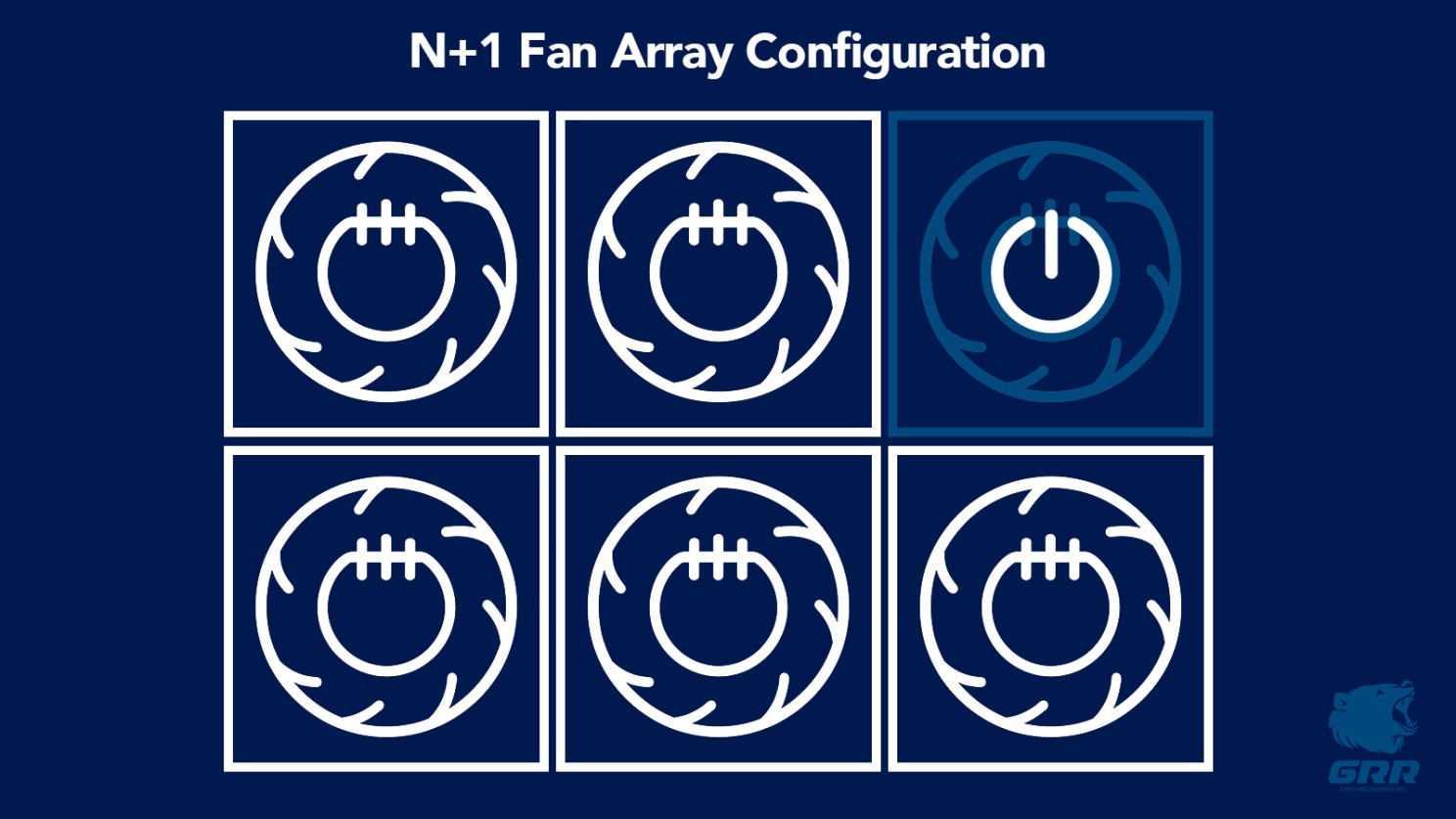
A schematic representation of EC fan wall redundancy (Image by GRR Cooling Experts)
Compact Design and Fast Installation:
EC arrays are made up of small modules that can be carried through doors, service corridors and stairwells. Most retrofits do not require cranes or large structural changes. Components are assembled inside the mechanical room and bolted into the existing air handler footprint. This reduces installation time and minimizes building disruption. In many cases, work can be scheduled over weekends or short planned shutdowns, which is important for operating rooms, clinical spaces and research environments.
Retrofit without downtime engineering approach >
Examples from New York:
In multiple recent hospital projects, GRR replaced older fans with EC-motor walls over a single weekend. One project involved upgrading an air handler with a six-fan array that reached full airflow by Monday morning without interrupting patient areas. In another case, a cancer treatment center moved from a belt-driven system to a compact EC array delivering more than 20,000 CFM. The entire swap, including new controls, was completed within the same day. These examples show how EC arrays let us modernize old mechanical systems quickly and safely, even in constrained spaces.
See a short 1-minute real-world GRR's installation video below as an example:
More real-world installation videos are available on GRR's YouTube channel. [ ▶︎ ]
How GRR Differs:
GRR takes a fully engineered approach. Instead of supplying a generic fan wall kit, we evaluate the actual airflow, static pressure, duct layout and operating schedule of the building. We design the array to match real load conditions and confirm performance through balancing and commissioning. (Retrofit mistakes that break projects>) Our controls team integrates the fans into the building management system so the operator has clear visibility. We focus on NYC and understand the scheduling, compliance and access challenges inside older buildings. Our goal is reliable, repeatable performance, not marketing claims.
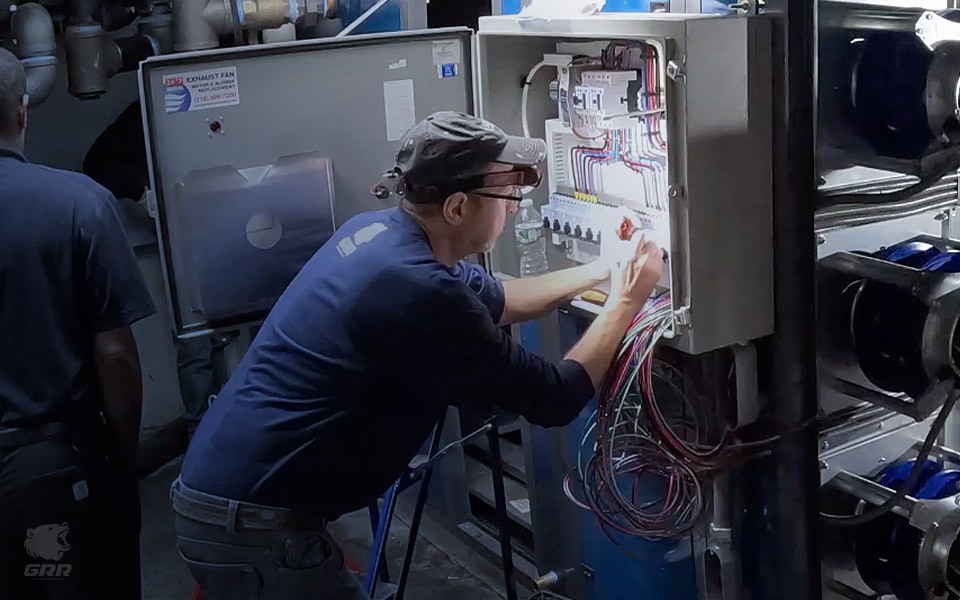
GRR's technician wiring control panel during the field EC fan array installation (Image by GRR Cooling Experts)
Benefits for Facility Managers and Building Owners:
EC fan arrays reduce energy costs, improve equipment life, and lower the risk of unplanned shutdowns. They support carbon reduction goals and can help buildings avoid fines associated with inefficient systems. The quiet, low-vibration design improves the indoor environment. Engineers gain better control over ventilation and can tune airflow in real time through the BMS. Owners benefit from a more efficient and reliable building that is easier to manage long-term.
Next Steps:
GRR Cooling Experts offers a free comparison of your current AC fan system versus an EC fan array. We evaluate airflow requirements, energy use and retrofit feasibility and provide clear numbers without pressure. If EC is a good fit, we design and schedule the work around your operations. If not, you still receive practical insight into your system’s performance. Reach out to schedule a short consultation: admin@grrcooling.com
About GRR Cooling Experts
GRR Cooling Experts Inc. is a New York–based HVAC retrofit engineering company specializing in ventilation upgrades for hospitals, laboratories, schools, and commercial buildings. Since 2007, GRR has helped organizations across the NYC metro area improve air reliability, energy efficiency, and compliance with Local Law 97 through precision EC fan array retrofits and critical environment ventilation solutions. Our team designs, installs, and commissions custom fan walls and EC-motor systems that reduce downtime, energy use, and maintenance costs, ensuring safe, continuous airflow where performance matters most.
[ ▶︎ ] Subscribe to our YouTube channel